
Kunsthaus Zürich, Heimplatz 1, Zurich (Switzerland)
A portrait of Marie-Antoinette in her underwear opens the argument. Élisabeth Louise Vigée Le Brun painted the queen in a simple white muslin chemise dress in 1783 — and the resulting scandal, which forced a second, more formally dressed portrait to be commissioned immediately, makes the point immediately: clothing has always been a political instrument, a social contract, a statement that others will read whether you intend them to or not.

Fashion Drive: Extreme Clothing in the Visual Arts at Kunsthaus Zürich brought together over 230 works across five centuries — paintings, sculptures, installations, photography, film, costumes and armour — to examine the relationship between art and fashion. The curatorial argument, developed by Christoph Becker and Cathérine Hug, is that fashion has never been merely decorative. It encodes power, desire, conformity and resistance.

The exhibition moved roughly chronologically, opening with actual Renaissance garments before moving through the 18th and 19th centuries. A dedicated section on Macaronis, Incroyables and Dandies documented the men who weaponised dress — who pushed clothing to such deliberate extremes that their appearance became a form of social aggression. They dressed to provoke, and polite society reacted accordingly.
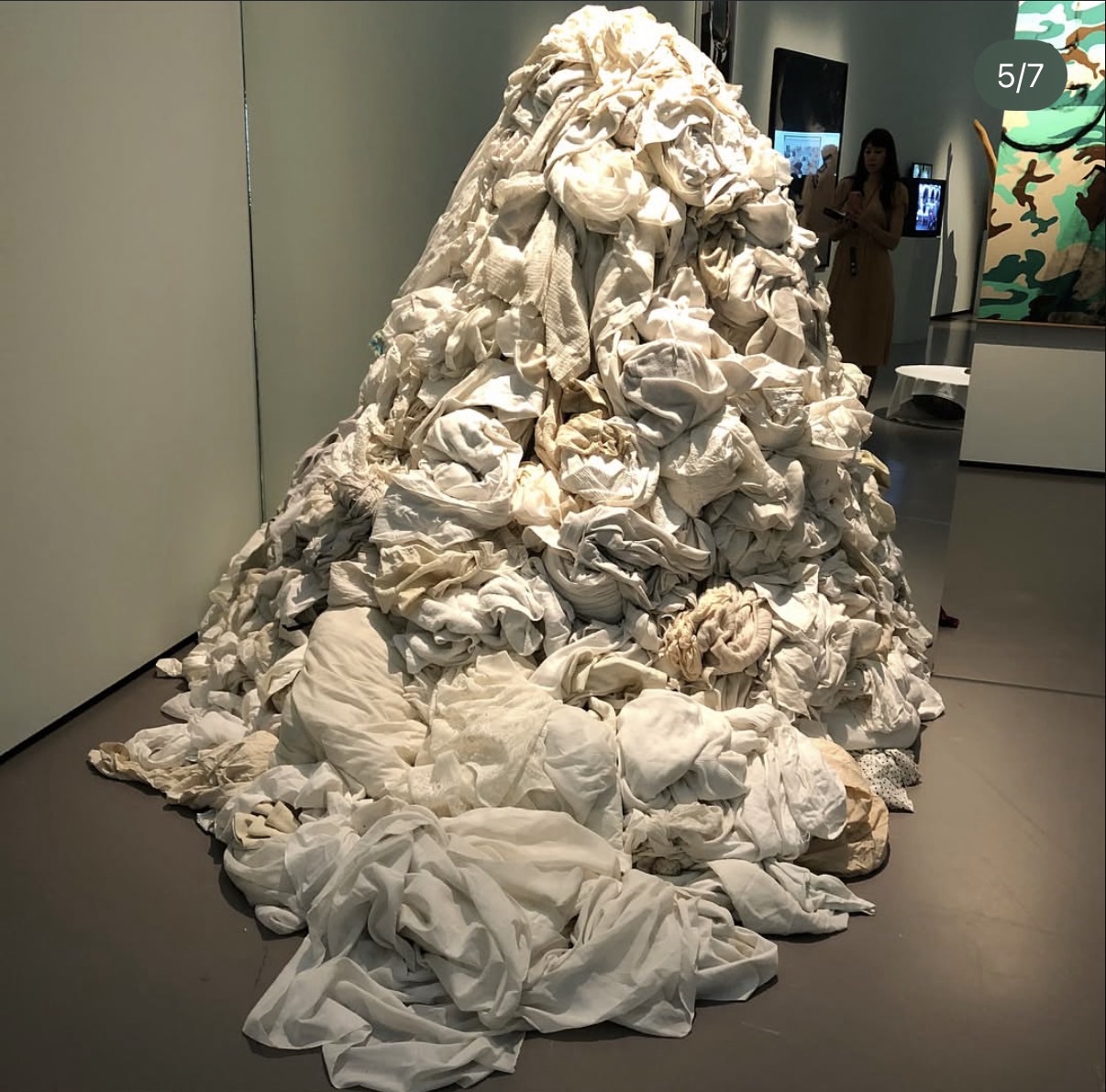
Salvador Dalí’s Femme à tête de roses (1935) brought fashion into Surrealist territory — the figure’s head replaced by blooming roses, desire and absurdity occupying the same space. Michelangelo Pistoletto’s Metamorfosi made the contemporary argument most directly: a large-scale installation piling rags and discarded clothing on either side of a double-sided mirror. You see the waste of fast fashion, and then you see yourself standing in front of it.
The final rooms brought the argument into the present. Daniele Buetti’s No Face series — photo collages of David Beckham and Kate Moss with their faces methodically obscured — removes the one element that supposedly makes a fashion image personal. What remains is clothing, posture, brand — the face was always beside the point.
Five centuries of dress, examined through the work of sixty artists. The Kunsthaus made a case that fashion is one of the most reliable indicators of how a society organises itself — and that artists have been making that case, across five centuries, with considerable precision.
Artène visited Fashion Drive: Extreme Clothing in the Visual Arts, May 2018.