
Tate Modern, Bankside, SE1 9TG London (UK)
A single year. Not a retrospective, not a survey — one calendar year, moved through month by month. The rooms were calm in the final weeks of the show, the crowds thinned, the pace unhurried. The right conditions for an exhibition that rewards attention.
Picasso 1932: Love, Fame, Tragedy took that year as its subject. The premise sounds narrow. It was not.

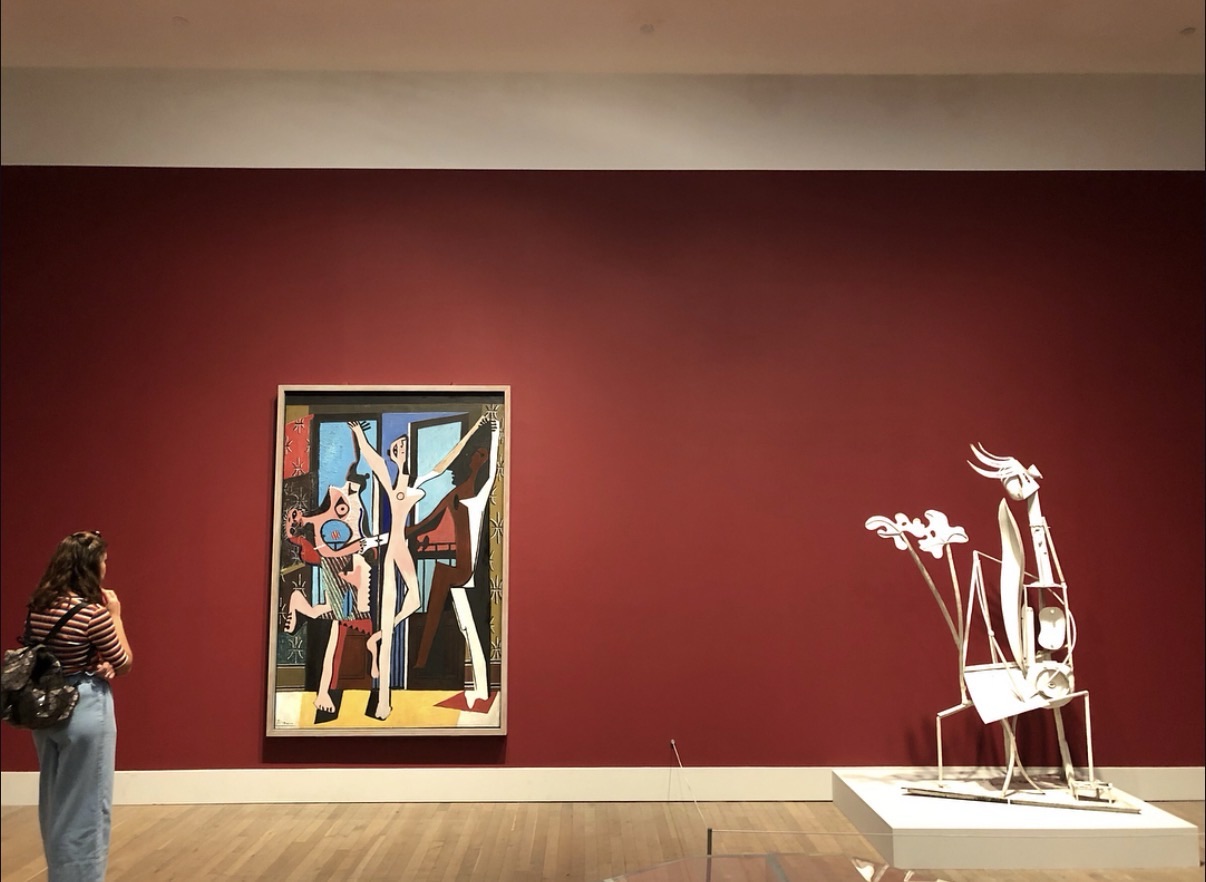
The entrance established the context. The Three Dancers (1925) was placed early, before the 1932 sequence began — a work of fractured bodies and raw energy that set the register without explaining it. Nearby, earlier portraits: a self-portrait from 1901, Portrait of Olga in an Armchair from 1918. Picasso young, then Picasso with his wife.
Then the year began.
1932 was the year Picasso painted Marie-Thérèse Walter obsessively — the young woman he had been seeing in secret since 1927, while still married to Olga. The paintings do not announce this. They show a sleeping woman, a reclining figure, a face dissolving into curves. But moving through the rooms chronologically, month by month, the pattern accumulates. The same body, the same stillness, painted again and again with an attention that goes beyond observation.

The Dream was the work most reproduced in the exhibition material — and in the room it held that status easily. The figure sleeps, the face split between profile and full view, the colours warm and interior. It is a painting about someone watched while unaware of being watched. Rest, nearby, carried a different quality — quieter, the figure more at ease, the brushwork less insistent. It looked exactly like its title. Yet Picasso’s own words complicate that reading. Reflecting on his armchair paintings from this period, he said: “When I paint a woman in an armchair, the armchair, it’s old age and death, isn’t it?” The rest is not peaceful. It is haunted.
What the exhibition did well was refuse to separate the work from the life without reducing the work to biography. The paintings are extraordinary on their own terms. But knowing what was happening in the studio, in the marriage, in the two parallel lives Picasso was maintaining — that knowledge changes what you see. The tension is in the paint. It was placed there.
Walking out, I knew more about Picasso as a human being than I had when I walked in. Not just the artist whose name appears on every museum wall — the man, with his appetites and his evasions and his extraordinary, ruthless attention. The paintings had done that.
Artène visited Picasso 1932: Love, Fame, Tragedy, August 2018.