
Palazzo Diedo – Berggruen Arts & Culture – Cannareggio 2386 , Venice (Italy)
Palazzo Diedo opened in 2024 — Berggruen Arts & Culture’s 18th-century residence in the Cannaregio district, the largest contemporary art space to open in Venice since Pinault’s Punta della Dogana fifteen years earlier. I went in the final days of February, in the last week before Olaf Nicolai’s Eisfeld II closed, and ended up spending most of the afternoon there.

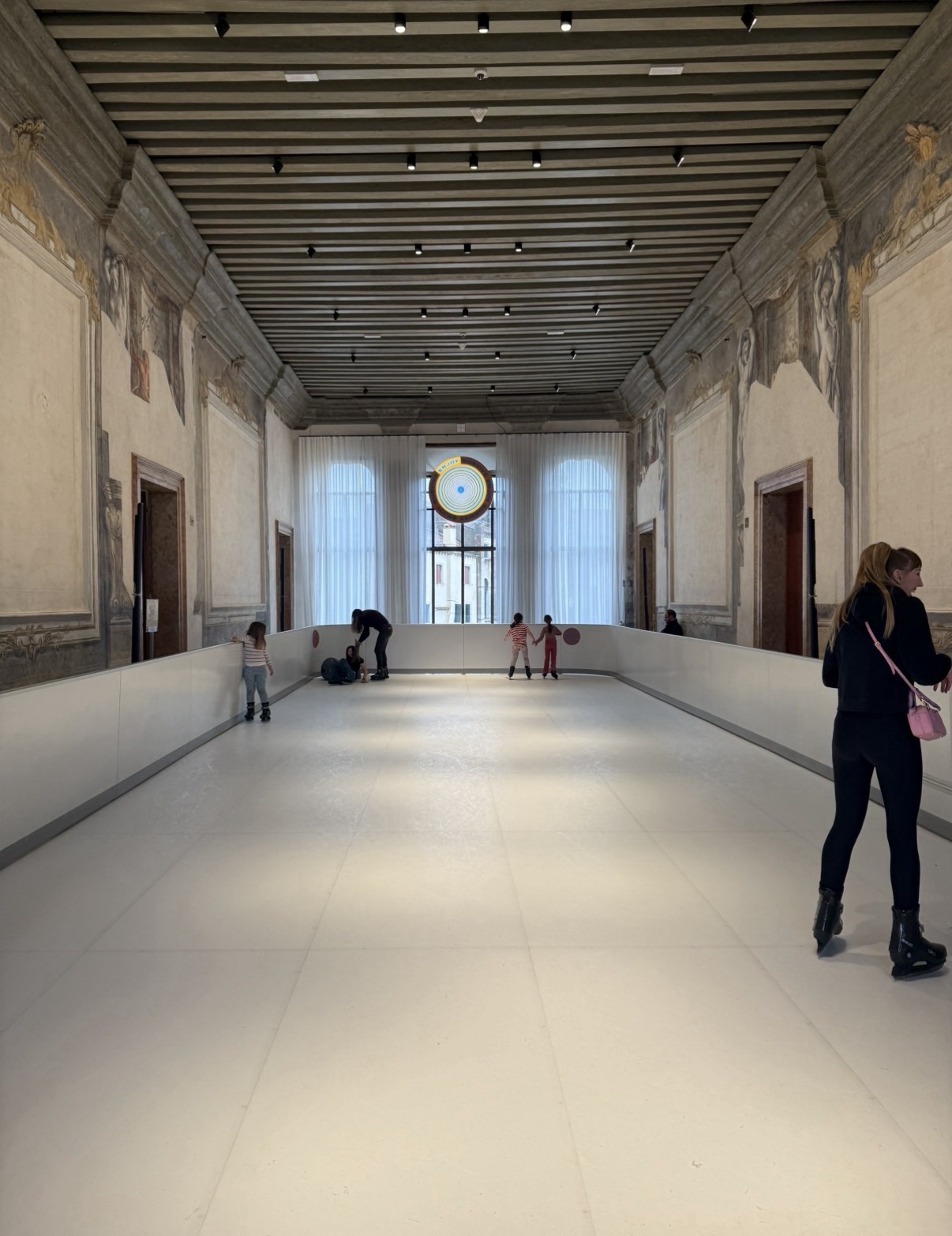
The ice rink was on the first floor. A hundred square metres of engineered ice in a baroque ballroom, beneath painted eighteenth-century frescoes. At either end of the rink, Nicolai’s lightboxes — ENJOY/SURVIVE I & II — hung on the tall windows, their paired words visible as you skated between them. I put on skates and stepped onto the ice. The soundtrack by Berlin band To Rococo Rot moved through six speakers arranged around the rink. Above, the frescoes. Below, ice. The situation was both absurd and completely serious.
Nicolai first made Eisfeld in Zurich in 2001. The Palazzo Diedo version was conceived for this specific room, and the room earns it. Skating in a Venetian ballroom, in a city built on water, in the last days before the rink would be dismantled — the pleasure was real, and the impermanence was folded into it.

The permanent collection, encountered on the way through the building, held several things worth stopping for. Sterling Ruby’s Lantern — hanging lamps in the entrance, their red-streaked glass panels made from forged studio waste and scrap — reference the lanterns that have defined Venice’s streets and canals for centuries. They are archaic and entirely of now.
Urs Fischer’s Omen was the work I kept returning to mentally afterwards. Six hundred hand-blown Murano glass droplets, mirrored, suspended from the ceiling and falling through the room like arrested rain. Each one reflects everything around it — the architecture, the light, the other visitors — slightly wrongly. The room became unstable in a way that took a moment to locate. Fischer also contributed Good Luck Peanuts, an aperture cut into the ceiling to expose a glimpse of sky. The building, literally opened.
Carsten Höller’s Doubt Staircase connects the floors through a spiral structure inclined at precisely five degrees. Enough to notice. Not enough to be sure you are noticing. Höller completed a staircase that the palazzo’s original architect, Andrea Tirali, never finished. Walking up it, the doubt arrived exactly on schedule.
Artène covered Olaf Nicolai: Eisfeld II, February 2026. All photography by Elasse.